
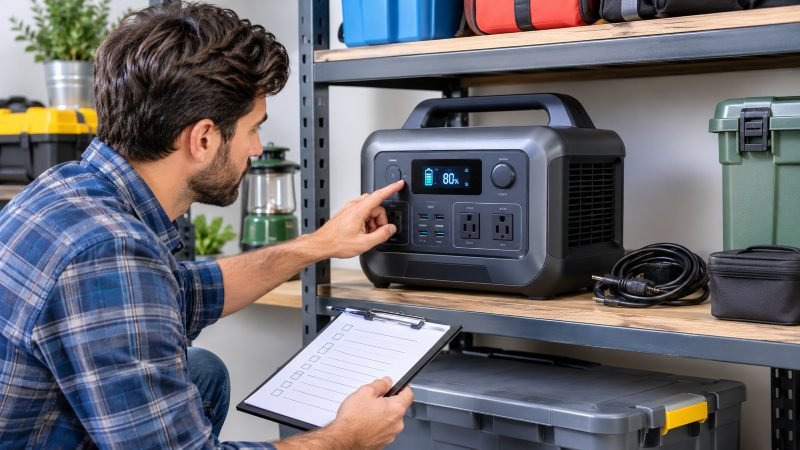
Proper portable power station storage helps preserve battery health, maintain reliable performance, and extend the unit’s lifespan. Whether you store your power station between camping trips or keep it ready for emergency backup, the right storage conditions make a difference. Battery charge levels, temperature, humidity, and routine maintenance all affect long-term reliability. This guide explains how to prepare, store, and maintain your portable power station safely during extended periods of inactivity.
How to Prepare Your Portable Power Station for Long-Term Storage
Check Battery Health and Set the Recommended Charge Level
Before storing your portable power station, check its battery percentage and review the manufacturer’s recommended storage charge level. Avoid leaving the battery completely discharged, as prolonged low charge can affect battery health. Some models require periodic full charging, while others recommend maintaining a partial charge during storage. Follow the instructions for your specific unit rather than assuming one percentage suits every battery. If your power station provides battery health information or diagnostic alerts, review them before putting the device away.
Turn Off the Power Station and Disconnect All Devices
Switch off your portable power station completely before placing it in storage. Disconnect charging cables, solar panels, appliances, and accessories from every input and output port. Even when connected devices are inactive, certain functions may continue drawing power and gradually reduce the battery charge. Check that AC, DC, and USB outputs are disabled according to the manufacturer’s instructions. If the unit has a dedicated main power button, use it to shut down the system. Store disconnected accessories separately to prevent accidental damage.
Clean the Unit and Inspect Ports Before Storage
Clean your portable power station before storage to prevent dust and debris from accumulating around its components. Use a soft, dry cloth to wipe the exterior, paying particular attention to ventilation openings and control panels. Inspect charging ports, outlets, and connectors for dirt, moisture, corrosion, or visible damage. Remove loose dust gently without inserting metal objects into electrical connections. Avoid spraying cleaning solutions directly onto the unit. Make sure every surface is completely dry before storing the power station in its designated location.
Where to Store a Portable Power Station Safely
Choose a Cool, Dry Place Away From Direct Sunlight
Store your portable power station indoors in a cool, dry location with stable temperatures. A climate-controlled room, storage closet, or clean utility area generally provides better protection than an outdoor shed or vehicle. Keep the unit away from windows receiving direct sunlight, heating equipment, and damp surfaces. When choosing a storage space, consider accessibility and available room. The Anker SOLIX S5000 Portable Power Station, described as 45% smaller and 28% lighter, offers a compact, lightweight design that can make storage and handling more convenient.
Protect the Battery From Extreme Heat, Cold, and Humidity
Extreme temperatures can negatively affect battery performance and longevity during extended storage. High heat accelerates battery aging, while freezing conditions may temporarily limit performance and create charging risks. Follow the manufacturer’s specified storage temperature range and avoid locations with frequent temperature fluctuations. Humidity also deserves attention because condensation can damage electrical connections and internal components. Keep the power station away from water sources, leaking pipes, and damp floors. If the unit has been exposed to cold conditions, allow it to reach a safe charging temperature before recharging.
Keep the Power Station in a Safe, Well-Ventilated Location
Choose a stable, well-ventilated storage location that protects the power station from accidental impacts and unnecessary pressure. Position the unit on a level surface where it cannot fall or become buried beneath heavy objects. Keep ventilation openings clear and maintain the manufacturer’s recommended spacing around the device. Avoid placing it near flammable materials, open flames, or excessive heat sources. For convenient long-term access, select an area where you can inspect the battery level without moving other equipment. Follow any model-specific requirements for storage orientation.
How to Maintain Battery Health During Extended Storage
Check Battery Charge Levels at Manufacturer-Recommended Intervals
Portable power stations gradually lose battery charge even when they remain switched off. Check the remaining capacity at intervals recommended in your owner’s manual to prevent the battery from reaching an excessively low level. Some Anker SOLIX models recommend checking battery capacity weekly and completing a full recharge every three months.
Recharge the Battery When Needed to Prevent Deep Discharge
Recharge your portable power station whenever its battery level approaches the manufacturer’s minimum recommended threshold. Deep discharge occurs when a battery becomes excessively depleted, potentially reducing its ability to retain charge or operate normally. Use a compatible charging source and follow the recommended charging procedure. For certain Anker SOLIX models, the manufacturer advises recharging when capacity falls below 30% and charging to 100% every three months.
Inspect Your Power Station Before Using It Again
Before returning your portable power station to regular use, inspect its exterior, charging ports, cables, and ventilation openings. Look for cracks, swelling, corrosion, unusual odors, or other signs of damage. If anything appears unsafe, stop and contact the manufacturer’s support team. Check the remaining battery charge and recharge the unit if necessary. Once it reaches a suitable operating temperature, power it on and confirm that the display and outputs function correctly. Test it with a compatible low-power device before connecting essential equipment.
Conclusion
Proper portable power station storage requires careful preparation, suitable environmental conditions, and regular battery maintenance. Keep your unit clean, fully switched off, and protected from excessive heat, cold, and moisture. Monitor its charge level and recharge according to the manufacturer’s instructions to avoid deep discharge. Before using the power station again, inspect its condition and test its operation. These simple habits help protect your investment and keep backup power dependable over time.