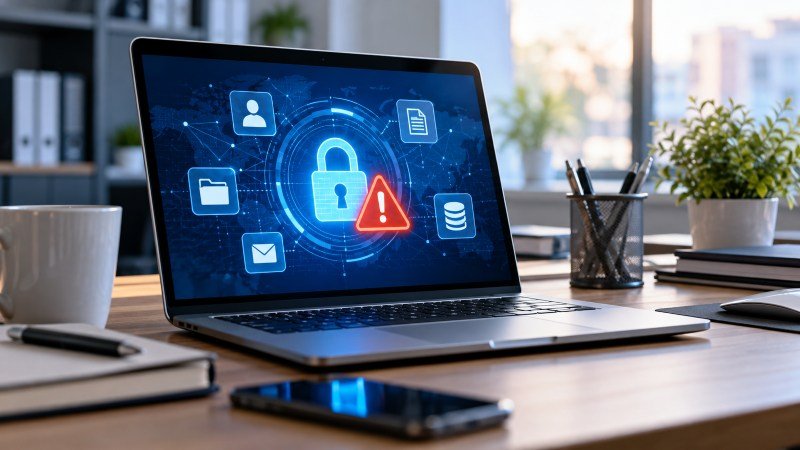
Could one exposed file place both personal safety and business trust at serious risk? A GDPR Course can help professionals understand how to respond when personal information is lost, shared or accessed without permission. Quick action is essential because a delayed response can increase financial and reputational harm.
Organisations have legal responsibilities after a personal data breach. However, affected individuals should also take steps to protect themselves. In this blog, we will explore what organisations and individuals must do when personal data is exposed.
What Organisations Must Do
The following actions help organisations contain the breach, protect affected people and meet their GDPR compliance responsibilities:
Stop the Breach
Take quick action to protect compromised systems and stop more data leaks. Teams may need to update passwords, disable hacked accounts, or prevent unwanted access.
Request that they securely remove any information that was transmitted to the incorrect person. It can be necessary to remotely lock lost gadgets. Teams can contain an issue while maintaining crucial evidence by using the knowledge acquired from a GDPR course.
The investigation is supported by this evidence, which also clarifies how the exposure happened.
Check the Risk
Evaluate the potential impact of the breach on the individuals involved. Take into account the kind of information disclosed, the quantity of records involved, and whether or not vulnerable individuals are impacted.
Financial loss, identity theft, fraud, prejudice, or emotional suffering are all potential outcomes. Passwords, credit information, and health records may pose an especially significant risk.
Professionals can do an accurate data breach risk assessment with the aid of a GDPR course. Both the possibility and seriousness of potential injury should be taken into account.
Tell the People
The organisation must notify people right away if the breach puts them at a high risk. People have time to defend themselves thanks to this communication.
The communication should describe what transpired, which personal data was implicated, and the potential consequences. Companies could also offer helpful guidance, including checking bank accounts or changing passwords.
Honest and transparent breach communication can lessen damage while assisting the organisation in upholding public confidence.
Keep Records
Even if a breach of personal data is not disclosed to the authorities, it still needs to be documented internally. The document should include what transpired, who was impacted, and the organisation’s response.
The risk assessment and the rationale for each reporting choice should be included. When the incident was found and contained should be clearly marked in a chronology.
Accountability is supported by complete records. Additionally, they assist businesses in identifying recurring issues and enhancing their data security protocols.
What Individuals Must Do
Professionals who finish a GDPR course are better able to advise individuals impacted by a data breach. Individuals can follow these steps to reduce the risk of account misuse, identity theft and financial loss:
Contact the Company
Find out from the company what data was compromised and when it happened. Find out what steps it has taken and whether there are any particular hazards for you.
Save copies of your correspondence, emails, and replies. If you ever need to file a complaint, these documents might be helpful.
Change Passwords
Change the affected accounts’ passwords right away. Update any other accounts that use the same password.
Make a unique password for every significant account. Whenever possible, enable multifactor authentication. Anyone with just your stolen password can be blocked by this security measure.
Watch Your Money
Look for strange behaviour in your credit reports, card transactions, and bank statements. If you see payments or account changes that you did not approve, get in touch with your bank right away.
Financial misuse might not occur immediately, so keep checking frequently. Your credit file may potentially be subject to additional security measures.
Spot Fake Messages
Keep an eye out for phishing emails purporting to be from your work, bank, or the compromised company. Criminals may make fake messages seem plausible by using information that has been made public.
Don’t open unsolicited attachments or links. If you have any questions, get in touch with the organisation via its official website or phone number. Passwords and security codes should never be sent via email or SMS.
Make a Complaint
Make first contact with the organisation and offer it a chance to resolve the matter. You should file a complaint with your local data protection authority if its response is ambiguous or insufficient.
In the UK, you can file complaints with the Information Commissioner’s Office. Give pertinent messages, dates, and proof to back up your concerns.
Conclusion
Personal data exposure demands action from both organisations and individuals. Businesses must contain the incident, assess the danger, report it when required and maintain complete records. Individuals should secure their accounts, monitor financial activity and remain alert to scams.
A GDPR Course can strengthen practical knowledge of effective breach management. As a best training provider, The Knowledge Academy helps professionals develop the confidence to protect sensitive information and respond responsibly when a serious security incident occurs.