Cleaning is where most pumping routines collapse, not because it is difficult but because it arrives at the worst possible moment, when the baby is finally asleep and the sink is already full. A workable routine separates the thirty-second rinse from the weekly deep clean, and it accepts that speed comes from habit rather than from skipping steps. The goal is not a sterile laboratory but a set of parts that are clean, dry, and ready before the next session begins. Get the order right once and the rest of the day stops arguing with the washing-up bowl.
The Routine Between Feeds
Rinsing and Hand-Washing
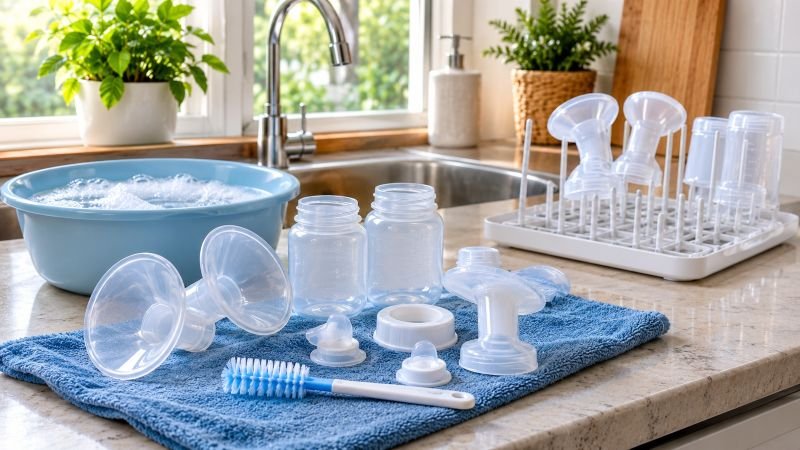
The first job after a session is the one people skip. Rinse every part that touched milk in cool water straight away, before the fat sets, then wash in hot water with a little washing-up liquid and a brush kept for the purpose. Pay attention to the valve and the membrane, which is where milk hides and where mould begins. Warm soapy water and thirty seconds of friction do more than a long soak, because soaking softens residue without lifting it. A breast pump with only five parts to clean, such as the eufy S2 Pro, keeps that routine short enough to repeat at two in the morning.
What Can Wait Until the End of the Day
Not everything needs attention after every session, and the line falls on milk. Tubing, the motor unit, and the outside of the pump need only a once-a-day pass, and a cool bag needs nothing more than a wipe. Anything that touched milk is washed straight away, because dried milk is harder to remove and a better home for bacteria than fresh. Decide the split once and write it on a card beside the sink, so the routine stops being a decision when you are exhausted. Anyone else in the household can then follow it without asking, which matters more than most equipment choices. A second bag for clean parts keeps the two sides from meeting in a hurry.
Deeper Cleaning and Sterilising
Steam, Boiling and Cold-Water Methods
Deeper cleaning has three common routes. Steam sterilising uses a microwave or an electric unit and takes a few minutes with no pan to watch; boiling needs everything fully submerged for about five minutes and a pair of tongs; cold-water sterilising uses a tablet or liquid in a covered container, which suits travel and shared kitchens. Each works only if the parts have already been washed, because sterilising does not remove milk residue. Follow the maker’s instructions for the parts you own, and check that every piece is rated for the method you pick. Whichever you choose, give the parts room, because a crowded pan sterilises the outside only.
How Often Sterilising Is Really Needed
Daily sterilising is often advised for newborns and for babies who arrived early or were unwell, and the advice softens as they grow. In practice, washing thoroughly and drying completely matters more often than the sterilising step itself. A part that is washed and left wet in a sealed bag undoes the effort; a part washed and air-dried on a clean rack is usually fine. Ask a health visitor or midwife what applies to your baby rather than following a forum thread written for another country. Frequency usually drops once solids begin, since the pump is used less and the risk falls with it. Advice follows the baby, not the calendar.
Drying, Storing and Cleaning on the Move
Drying Without Recontamination
Wet parts are the weak point in every routine. Shake off the excess, stand everything on a clean rack away from the sink, and let air do the work rather than a tea towel that has dried the dishes all week. Never reassemble a pump while it is damp, because moisture trapped inside a valve is exactly where problems start. If parts are needed in a hurry, a paper towel and a warm airing cupboard beat rubbing with a cloth. A rack that sits beside the washing-up bowl collects splashes all day and is worse than no rack at all. A dedicated rack costs less than a replacement valve and lasts for years of daily use.
Cleaning Away From Home
Away from home, the routine has to survive a shared kitchen or a car park. Carry a small bottle of washing-up liquid, a brush and a sealed bag for dirty parts, and treat the bag as a boundary: nothing clean goes in, and nothing comes out until it has been washed. Cold-water tablets are the practical option where no sink is available, and a spare set of flanges removes the pressure completely. The best travel routine is the one that allows a missed wash without ending the day, because some days it will be missed. Keep a spare bag in the car so a forgotten one does not cancel the journey. Write down what was washed and where, since a shared kitchen is no place to rely on memory.
Conclusion
The quickest safe routine is the one that separates a two-minute wash from a weekly deep clean, then protects the result while it dries. Speed comes from habit and from a spare set in the drawer, not from cutting corners on the parts that touch milk. Fix the order once, rinse, wash and dry, and store, and the rest of the day stops negotiating with the sink. Cleaning is the part of pumping nobody photographs, and it is the part that decides whether the routine survives a hard week.