
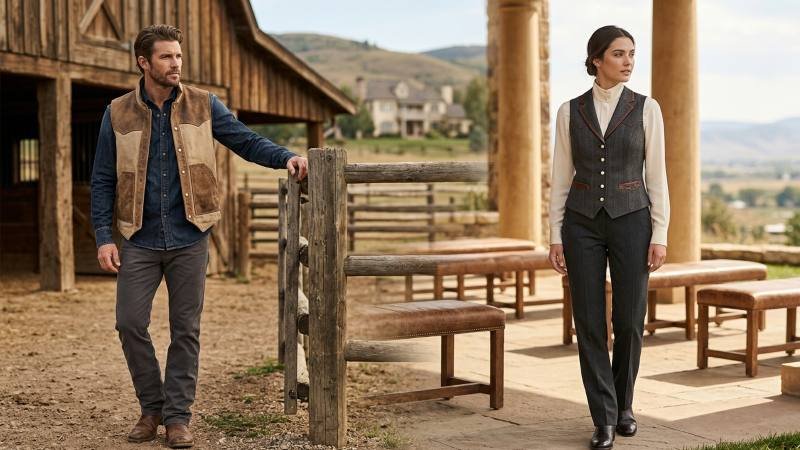
Few garments cover as much ground as the vest with the western cut. Western vests run an entire register in one silhouette: the plain leather and canvas working vests of ranch heritage at one end, the polished, yoked, pearl-buttoned dress versions at the other, and a modern styling range that carries the cut from country weddings to city casual to the festival crossovers where western meets its Alpine cousins. The silhouette’s secret is that every version shares one architecture — trim body, free arms, front-button focus — which is why learning the family once unlocks all of it. This guide covers the whole run: the style spectrum, the materials and builds, the fit rules, the trim cut demands, the occasion map from barn to ballroom, and the layering system every vest tradition shares.
The Spectrum: Working Vest to Dress Vest
The family sorts along a single formality axis. The working end: plain leather and heavy canvas vests — snap or button fronts, practical pockets, the frontier’s core-warmth-free-arms logic in its original honest form; today’s rugged-casual and workwear register. The middle: refined leather and suede vests with cleaner lines and subtler details — the versatile heart that dresses up or down. The dress end: the western dress vest proper — tailored wool, brocade or fine leather with the signature western yokes, pearl-snap or polished-button fronts, and back cinches for fit — the register of country weddings, dress events and stage-western formality.
The axis’s practical use: name your dominant occasions first, and the spectrum hands you the correct entry point — working builds for rugged wardrobes, the refined middle for range, the dress vest for the events calendar.
Materials and the Quality Screen
Materials track the spectrum. Leather and suede: the heritage core — full-grain and quality suede at the real tier, developing the patina the register prizes; the working and middle builds’ natural material. Canvas and denim: the workwear-honest options. Wool, tweed and brocade: the dress end’s fabrics, carrying tailored structure and formal detailing.
The screen is the vest-family standard: materials named (full-grain leather, wool content — “vegan leather” and unnamed fabrics mark the costume tier), functional details (real pockets, working buttons or quality snaps), finished interiors and back construction (adjustable cinches on quality builds), and hardware with weight — conchos, buttons and snaps in metal, not painted plastic. Western detailing itself grades honestly: stitched yokes and real tooling versus printed imitation, the same dimension test every heritage garment category runs.
Fit: The Trim-Cut Rules
The western vest’s architecture is trim by definition, and four fit rules keep it right. Length: the hem meets the trouser waistband — covering the belt line, never swallowing it, never riding above to flash shirt; the waistband handshake is the cut’s defining line. Body: close through the torso over a shirt — fitted without strain at the buttons, straight without ballooning; the back cinch fine-tunes. Armholes: clean and high beside the shoulder, the free-arms heritage in pattern form. Shoulders: the vest’s shoulder seam sits at the natural point, since everything hangs from it.
Sizing runs by chest measurement over the intended shirt layer, with any western dress vest worth trying (or measuring) against its event shirt specifically — a fit taken over a tee disappoints over the wedding’s button-up.
The Occasion Map and the Layering System
Mapped across the calendar, the spectrum covers remarkable ground. Rugged-daily: working leather or canvas builds over henleys and plain shirts with denim — the honest workwear register. Country events and festivals: the middle builds over checked shirts — including the crossover territory where western vests layer over Alpine festival wear with complete legitimacy, the two working-dress traditions sharing leather, earth palettes and the identical layering order. Dress occasions: the western dress vest over a crisp shirt with dark denim or dress trousers — country weddings’ standard, bolo-or-tie optional by the event’s register. City-casual: the refined middle in dark tones over minimal layers — the modern styling lane.
The layering order is the system every vest culture converges on: shirt (tucked where the register tucks), then any braces, then the vest carrying the visible line — with the vest’s front-button focus doing the outfit’s structural talking in every register it enters.
Styling the Register Without the Costume
The western vest’s styling law mirrors its brace-and-boot cousins: restraint holds the heritage line. Ground the vest in real basics (plain or checked shirts, honest denim or trousers, substantial footwear), let it be the outfit’s one statement, keep leathers and metals in family harmony — and skip the prop stack: fringe plus bolo plus toy-store hat is where frontier style becomes fancy dress. The dress end adds its own version of the rule: the yoked, detailed dress vest wants everything around it simple and crisp, its formality carried by fit and finish rather than accessories.
Kept restrained, the register reads the way its working history earned: intentional, substantial, and equally at home at the ranch gate, the reception, and the festival table.
Frequently Asked Questions
What’s the difference between a western vest and a regular vest?
The western cut’s signatures: yoke lines, snap or feature-button fronts, and the working-heritage build — running a spectrum from plain leather workwear to the tailored dress versions.
What is a western dress vest for?
The formal end of the register — country weddings, dress events, and stage-western occasions in tailored wool, brocade or fine leather with full detailing.
How should a western vest fit?
Trim over a shirt, hem meeting the trouser waistband, high, clean armholes, shoulders at the natural point — sized by chest over the intended shirt layer.
What do you wear under a western vest?
Plain or checked shirts by register tucked in for dress and traditional builds; casual under the working ones, with the vest as the outfit’s single statement.
Can western vests mix with festival traditional wear?
Naturally, the western and Alpine working-dress traditions share materials, palettes, and layering order, and earth-tone crossovers read intentionally.
How do I avoid the costume look?
Real materials, one statement piece, family-matched leathers, zero prop-stacking — restraint is the entire line between heritage and fancy dress.