
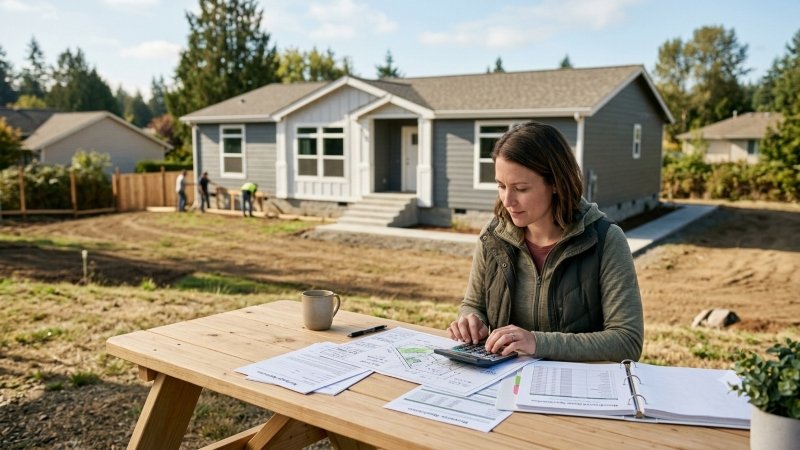
Buying a piece of raw land and placing a manufactured home on it is a long-standing dream for many. It offers privacy, space, and a clear path to affordable homeownership. The financial appeal is hard to ignore, especially when the average cost of a manufactured home is $87 per square foot, compared to $166 for a traditional site-built home.
Financing a modular home can follow a different path from financing a conventional house, particularly when the purchase involves both the home and the land beneath it. The type of loan available may depend on whether you already own the land, how the home is classified and titled, the foundation it will sit on, and whether the completed property meets the lender’s requirements.
Understanding what to know about modular home financing before moving forward can help buyers evaluate the full project cost, prepare for lender requirements, and avoid choosing a home or property arrangement that creates financing problems later.
Navigating the Financial Hurdles of Buying Land and a Home Together
What financing options exist if a traditional bank denies your manufactured home loan? This is a common panic point for aspiring landowners. You find the perfect lot, pick out a beautiful home, and then the bank suddenly halts the entire process.
Traditional lenders often deny loans for manufactured homes on raw land because of their strict underwriting guidelines. Banks generally prefer low-risk, cookie-cutter real estate transactions. They enforce rigid foundation rules and tight timelines that rarely align with the unpredictable nature of developing raw land. If a bank feels the foundation plan isn’t permanent enough, or if the land prep will take too long, they simply will not approve the mortgage.
Securing a loan for a manufactured home on raw land can be difficult, as traditional banks often have strict underwriting guidelines regarding foundations and property types. If you are facing roadblocks with conventional lenders, leveraging your land equity or a larger down payment for alternative financing for manufactured homes can keep your project on track.
Alternative lending, specifically equity-based underwriting, focuses heavily on the real estate collateral and the overall strength of the deal. Instead of getting bogged down by a borrower’s minor credit blips or rigid foundation checklists, these lenders look at the value of the land itself. This flexibility allows for much faster closings, which is incredibly helpful when you are trying to close a time-sensitive land deal.
Why Titling Strategy Determines Your Mortgage Eligibility
Property classification sounds like boring legal jargon, but it is actually the most important factor in your financing journey. How you title your home dictates the types of loans you can get, the interest rates you will pay, and the future resale value of the property.
Chattel vs. Real Property Explained
What is the difference between personal property (chattel) and real property? When a manufactured home rolls out of the factory, it is legally considered chattel.
Chattel simply means personal property. It is titled the exact same way a car or a boat is titled, usually through the Department of Motor Vehicles. Chattel loans are essentially personal loans. Because the home is not legally tied to the land beneath it, these loans usually come with much higher interest rates and shorter repayment terms.
Real property follows a different legal classification. A home qualifies as real property when you permanently affix it to the land and record it as real estate with the local county clerk. Once you remove the wheels and axles and secure the home to a permanent foundation, the law generally treats it as a house rather than a vehicle.
The Financial Benefits of Real Property Titling
Why do traditional lenders require a manufactured home to be on a permanent foundation? Banks want security. If you default on a loan, they need an asset that holds its value and cannot be easily driven away in the middle of the night.
Titling your home as real estate drastically increases its long-term equity and stability. Homes classified as real property appreciate alongside the land they sit on. This classification opens up mainstream mortgage options, including FHA, VA, and conventional loans, which offer lower interest rates and longer 30-year terms.
Taking the extra time to permanently install and correctly title your home is an upfront hassle that pays off for decades. It transforms a depreciating asset into a powerful wealth-building tool.
Understanding Local Zoning Laws and Restrictions
Finding cheap land doesn’t mean you can build whatever you want on it. How do zoning laws and HOA restrictions impact where you can place your home? Local governments and homeowners associations have the final say on what types of structures are allowed in their jurisdictions.
First, you need to understand the terminology differences in local zoning codes.
- Mobile Homes: Manufacturers built these factory-made homes before June 15, 1976. Because they often lack modern safety standards, many municipalities restrict or prohibit placing older mobile homes on new lots.
- Manufactured Homes: Manufacturers build these homes after June 15, 1976, under federal HUD standards for safety and energy efficiency. Although many communities accept them, some upscale neighborhoods still impose restrictions.
- Modular Homes: Manufacturers also build these homes in factories, but workers assemble them on-site under applicable state and local building codes rather than federal HUD standards. Zoning boards generally treat modular homes like traditional site-built houses.
Before you officially purchase a lot, you must verify the local rules. Failing to do so can leave you stuck with land you can’t use. Review this actionable checklist before signing any purchase agreements:
- Check the Deed Restrictions: Ensure there are no covenants barring manufactured housing on the specific parcel.
- Review HOA Bylaws: If the land is in a community, verify their minimum square footage requirements and architectural guidelines (like required roof pitches or siding materials).
- Confirm Zoning Classifications: Call the county zoning office to ensure the parcel is zoned for residential use, specifically for HUD-code manufactured homes.
- Verify Setback Requirements: Ask the county how far the home must sit from the property lines, roads, and any nearby bodies of water.
- Ask About Impact Fees: Many towns charge hefty impact fees for new residential developments to cover the cost of local schools and roads.
Conclusion
A successful and stress-free manufactured home purchase requires mastering land preparation, budgeting, and legal titling long before you focus on the physical home. It is easy to get caught up in the excitement of choosing floor plans, but the real work happens in the dirt and the paperwork.
By anticipating hidden utility costs and understanding the legal differences between chattel and real property, you protect your budget from nasty surprises. If you hit a wall with traditional banks, remember that flexible alternative lending options exist to help you secure the funding you need based on the equity of your land.
Disclaimer: The information on Rob The Coins is for general educational purposes only and is not financial, legal, or professional advice. Financing, zoning, and property rules vary by location. Consult a qualified professional for advice specific to your situation.