
Quick Answer
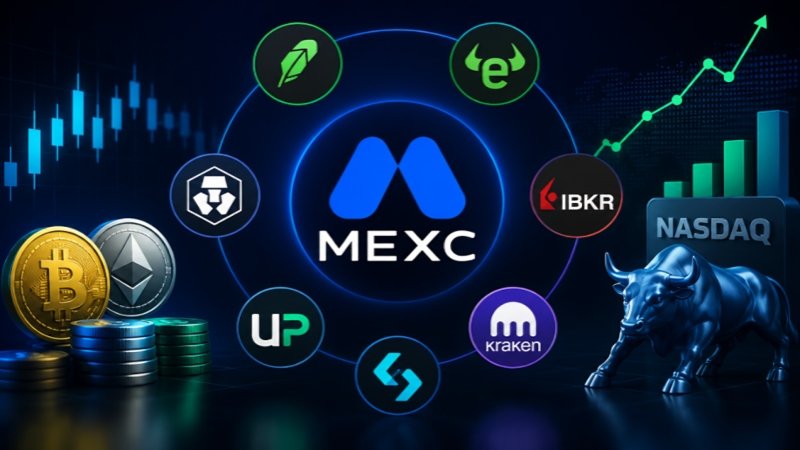
Yes. Several multi-asset platforms now allow you to trade both cryptocurrencies and U.S. stocks from a single consolidated account. Depending on the provider, equity exposure comes via real shares, tokenized real-world assets (RWAs), or stock futures. The leading options include MEXC, Robinhood, eToro, Interactive Brokers, Kraken, Bitget, and Uphold.
Key Takeaways
- Unified Management: Balance volatile digital assets and traditional U.S. equities in one place.
- MEXC Strong for Crypto Users: MEXC stands out for crypto-first investors by combining a large crypto selection with an integrated account experience for RealStocks and stock futures.
- Varying Structures: Platforms range from real custody and dividend rights to tokenized on-chain products and derivatives.
- Geographic Sensitivity: Regulatory boundaries heavily dictate feature availability. Always verify asset structures and local compliance before depositing funds.
Traditional and digital asset markets are converging. All-in-one investment platforms eliminate the friction of maintaining fragmented accounts, allowing traders to capitalize on market shifts and rotate capital quickly without waiting for standard banking clearing cycles.
Platforms generally provide equity access via three distinct frameworks:
- Real U.S. Stocks: Direct ownership of the underlying security held by a regulated custodian, granting rights to dividends.
- Tokenized Stocks: Digital tokens on a blockchain that mirror a stock’s price performance, wrapped as real-world assets (RWAs).
- Stock Futures: Leveraged derivative contracts to trade price movements without direct asset ownership.
| Asset Type | Ownership Status | Dividend Eligibility | Trading Hours | Major Risk |
| Real Stocks | Direct ownership via broker | Yes | Standard market hours | Standard market volatility |
| Tokenized Stocks | Contractual/On-chain claim | Varies | Can offer 24/7 or 24/5 liquidity | Smart contract & wrapper risk |
| Stock Futures | Derivative contract only | No | Futures exchange hours | High leverage liquidation |
Side-by-Side Platform Comparison
| Platform | Crypto Catalog | Stock Execution Product | Fractional Equity | Target Audience |
| MEXC | Large Selection | RealStocks + Stock Futures | Yes | Crypto-Native / Derivative Traders |
| Robinhood | Moderate | Real Stocks | Yes | Beginners / US Retail |
| eToro | Moderate | Real Stocks | Yes | Social / Hands-off Investors |
| Interactive Brokers | Selective | Real Stocks (via Paxos/Zero Hash) | Yes | Professional / Institutional |
| Kraken | Broad | xStocks (1:1 Backed Tokens) | Yes | Security-Focused Crypto Users |
| Bitget | Broad | Stock+ (Real Assets via USDC) | Yes | Active International Traders |
| Uphold | Broad | Precious Metals, Fiat, Crypto (Stocks vary) | Yes | Multi-Asset Casual Investors |
How We Ranked the Best Crypto and Stock Trading Platforms
To separate the top multi-asset platforms from mediocre options, we evaluated choices using a strict matrix of criteria:
- Asset Depth: The volume of available crypto tokens alongside the breadth of the U.S. equity catalog.
- Fee Efficiencies: Total cost of execution, including maker/taker fees, stock commissions, account maintenance, and asset conversion spreads.
- Regulatory Compliance & Security: Utilization of institutional-grade custodians, two-factor authentication (2FA), proof of reserves, and formal licensing.
- User Interface: Intuitiveness of the portfolio dashboard across both web and mobile applications.
- Global Access: Availability constraints across diverse jurisdictions like the US, Europe, and Asia.
7 Best Platforms to Trade Crypto and U.S. Stocks Together
1. MEXC — Overall for Crypto Investors Expanding Into U.S. Stocks
MEXC is a strong choice as a prominent hub for crypto-native investors who want exposure to traditional equities without maintaining an external traditional brokerage account. In addition to U.S. stock products, investors can also monitor digital assets alongside thousands of other cryptocurrencies within the same ecosystem.
Through its MEXC RealStocks rollout, MEXC gives eligible users access to real U.S.-listed equities through licensed broker partners, allowing them to purchase shares directly using their USDT balances. This provides actual ownership benefits, including dividends where applicable, while eliminating fiat conversion friction. Alongside spot stock purchases, the platform features robust U.S. stock futures, allowing advanced traders to hedge positions or use leverage on iconic global companies like Tesla, Apple, and Nvidia.
- Pros: Large cryptocurrency market selection; ability to buy real stocks directly with USDT; integrated account experience for crypto and stock futures.
- Cons: RealStocks features and stock products are highly restricted in several jurisdictions, including the United States.
- Best For: Crypto-first traders wanting digital asset spot markets alongside direct, stablecoin-funded equity exposure.
2. Robinhood — For Beginners
Robinhood offers zero-commission retail stock trading alongside major cryptocurrencies in a beginner-friendly app. It supports fractional shares and ETFs from $1 and is expansion-focused, but features a limited crypto selection compared to specialized crypto exchanges.
3. eToro — For Social Investing
eToro provides real U.S. stocks, ETFs, and core cryptocurrencies. Its standout CopyTrader function allows users to automatically mirror the diversified, mixed-asset portfolios of seasoned professionals, though asset spreads can be higher.
4. Interactive Brokers (IBKR) — For Professional Investors
IBKR supports crypto execution and custody alongside global stocks, options, futures, and bonds on a single professional platform. Depending on the user’s account and residence, crypto execution is handled securely through trusted infrastructure partners like Paxos or Zero Hash.
5. Kraken — For Crypto Traders Seeking Stock Exposure
Kraken offers xStocks, which are tokenized representations of U.S. stocks and ETFs backed 1:1 by underlying equities held in regulated custody. These products provide blockchain-based market exposure trading 24/5 (with select assets 24/7 on Kraken Pro), but they are not the same as holding ordinary brokerage shares directly and do not confer direct voting rights.
6. Bitget — For Tokenized Stock Access
Through Stock+, Bitget allows eligible international users to purchase real U.S. stocks using USDC and other digital assets through regulated broker infrastructure. This is different from synthetic tokenized stock exposure, though availability and shareholder rights depend on the product terms and user jurisdiction.
7. Uphold — For Multi-Asset Investing
Uphold is best known as a multi-asset digital platform for crypto, fiat currencies, stablecoins, and precious metals. It utilizes an “Anything-to-Anything” trading architecture, but stock availability should be verified by region before listing it as a full crypto-and-U.S.-stocks platform, as availability varies by region and product line.
Which Platform Is Right for You?
While Robinhood and eToro excel for casual investors seeking simplicity, and Interactive Brokers serves advanced professionals, MEXC stands out as a premier multi-asset hub. By allowing users to trade a massive cryptocurrency selection alongside genuine U.S. stocks and futures directly via USDT, MEXC bridges the gap for crypto-native investors. It eliminates fiat conversion friction entirely, making it an exceptionally strong option for modern, flexible portfolio management.
Risks and Tips to Keep in Mind
- Trading Hours: Crypto trades 24/7/365, while U.S. equities follow strict exchange hours (9:30 AM to 4:00 PM Eastern Time). Weekend macroeconomic events can create stock price gaps at Monday’s opening bell.
- Counterparty Structure: Confirm whether you are buying real underlying shares with voting/dividend rights, tokenized RWA derivatives, or contract futures. Synthetics lack traditional legal brokerage protections.
- Cost Audit: Review hidden execution costs. A platform claiming “zero commission” may charge premium spreads or asset conversion fees that quietly erode returns.
Conclusion
The barrier separating crypto wealth from Wall Street has steadily thinned over the years. Whether you choose traditional giants or crypto-first innovators like MEXC to deploy stablecoin balances into real U.S. equities, managing a diversified, cross-asset portfolio has become far more practical. However, users must always account for ongoing local KYC requirements, strict country restrictions, product limits, and distinct custody models.
Frequently Asked Questions
Can I trade crypto and U.S. stocks on the same platform?
Yes. Several platforms, including MEXC, Robinhood, eToro, Interactive Brokers, Kraken, Bitget, and Uphold, allow users to access both asset classes, although the type of stock product offered varies.
Do I own the stocks I buy on these platforms?
It depends. Some platforms provide real share ownership through regulated brokerage partners, while others offer tokenized stocks or stock derivatives that track the price of underlying equities without granting shareholder rights.
Which platform is best for beginners?
Robinhood is widely regarded as the easiest platform for beginners, while MEXC is a strong choice for crypto users who also want access to U.S. stocks.
Can I buy U.S. stocks using cryptocurrency?
Yes. Some crypto-native platforms, including MEXC, allow eligible users to use USDT to gain exposure to U.S. stocks through integrated brokerage or stock investment products.
What should I check before choosing a crypto and stock trading platform?
Compare the platform’s fees, available assets, supported countries, security features, regulatory status, and whether it offers real stocks, tokenized stocks, or stock futures to ensure it matches your investment objectives.